
Workplace Stress & Burnout Counselling
When work starts affecting the rest of your life
Most of us will experience periods of stress at work. Tight deadlines, competing priorities and increased responsibility are part of many careers. But when work begins affecting your sleep, relationships, health or ability to enjoy life outside the office, it may be time to pause and take stock.
At The Naum Centre, we provide evidence-based counselling for people experiencing workplace stress, burnout and leadership challenges. Whether you're feeling overwhelmed, questioning your career, struggling with workplace relationships or simply trying to keep everything together, counselling can help you better understand what's happening and develop practical, sustainable ways forward.
You may recognise some of these experiences:
You feel mentally and emotionally exhausted, even after time away from work.
Work follows you home, making it difficult to switch off.
You're constantly overwhelmed by competing demands.
You feel less motivated or engaged than you once did.
Small setbacks feel much harder to manage than they used to.
You're becoming increasingly irritable, impatient or emotionally drained.
You struggle to maintain boundaries between work and personal life.
You're questioning whether your current role is sustainable.
Workplace conflict or difficult relationships are affecting your wellbeing.
You're succeeding professionally but feeling increasingly disconnected from yourself.
You don't have to reach breaking point before seeking support. Counselling can help at any stage, whether you're beginning to notice the impact of stress or you've been feeling overwhelmed for some time.
Understanding Workplace Stress and Burnout
Work can provide purpose, connection and satisfaction, but it can also become a significant source of ongoing stress. High workloads, unrealistic expectations, organisational change, caring professions, leadership responsibilities, workplace conflict and blurred boundaries between work and home all contribute to increasing pressure.
Burnout develops when prolonged workplace stress exceeds our capacity to recover. Rather than simply feeling tired after a busy week, burnout often involves persistent exhaustion, reduced motivation, difficulty concentrating, increased cynicism or emotional detachment, and a growing sense that you're no longer functioning at your best.
Many people experiencing burnout are highly capable, conscientious and committed to their work. They often continue meeting expectations long after their internal resources have been depleted, making it difficult for others to recognise how much they're struggling.
Workplace stress also affects more than our professional lives. It can influence our physical health, relationships, confidence, decision-making and overall quality of life. Left unaddressed, it becomes increasingly difficult to separate work from everything else that matters.
Recognising these patterns early creates an opportunity to make meaningful changes before stress becomes more deeply entrenched.
Looking to better understand Burnout? Read our full guide: Understanding Stress & Burnout.
How Counselling Can Help
Counselling isn't about encouraging you to simply "cope better" with unhealthy situations. Instead, it helps you understand the factors contributing to your stress and identify practical, sustainable ways of responding.
Depending on your goals, counselling may help you:
better understand the causes of workplace stress and burnout
develop healthier boundaries between work and personal life
strengthen emotional regulation and resilience
improve confidence in difficult conversations and decision-making
navigate workplace conflict or challenging professional relationships
manage perfectionism, self-criticism or imposter feelings
explore career changes or professional transitions
reconnect with your values and priorities outside of work.
Our approach is collaborative and tailored to your individual circumstances, recognising that every workplace and every person's experience is different.
Burnout Counselling FAQs
Here are answers to some of the questions we're asked most often.
-
Burnout often develops gradually. Common signs include persistent exhaustion, feeling emotionally drained, reduced motivation, difficulty concentrating, increased irritability and finding it difficult to recover even after taking time away from work.
-
Absolutely. Many people seek counselling because they want to remain in their current role while finding healthier ways to manage stress, improve boundaries and reduce the impact work is having on the rest of their life.
-
Yes. Leadership brings unique challenges, including managing responsibility, supporting teams, making difficult decisions and balancing competing demands.
Counselling provides a confidential space to explore these pressures and strengthen your wellbeing.
-
Prolonged workplace stress can contribute to anxiety, low mood, sleep difficulties and emotional exhaustion. Counselling can help you better understand these connections and develop practical strategies to support your wellbeing.
Looking for something else?
What to Expect
The first step is understanding what's contributing to your current experience. Together we'll explore your work environment, the pressures you're facing and how these are affecting your wellbeing both professionally and personally.
Depending on your goals, sessions may focus on managing stress more effectively, strengthening boundaries, improving communication, navigating leadership challenges or exploring whether broader career changes are needed.
Rather than offering generic advice, we'll work collaboratively to develop practical strategies that fit your role, your responsibilities and the life you want outside of work.
Our Approach
At The Naum Centre, we understand that meaningful work is important, but it shouldn't come at the expense of your health, relationships or sense of self.
Our counselling is evidence-based, practical and person-centred. We take time to understand your unique circumstances, recognising that workplace wellbeing is influenced by organisational culture, personal values, life experiences and the demands you're carrying both inside and outside of work.
-

Sally Tanner
-

Billie Popovska
-

Tracy Dedman
-

Soledad De Virgilio
-

Snezana Milesic
Our goal isn't simply to help you survive work. It's to support you in creating a way of working that is both sustainable and aligned with the life you want to live.
Ready When You Are
Work is an important part of life, but it shouldn't consume it.
Whether you're experiencing ongoing stress, feeling close to burnout or questioning what's next in your career, counselling can help you better understand your experiences and create a healthier, more sustainable way forward.
If you're ready to begin, we'd be pleased to support you.
Build Skills Between Sessions
Many people find it helpful to continue reflecting between counselling sessions, or to begin exploring these topics before reaching out for support.
Explore practical workbooks, guides and mental health resources designed to help you build knowledge, confidence and lasting wellbeing in The Naum Centre’s growing Learning Hub.
You may like to begin with:
Grounding & Emotional Regulation
Digital Workbook
Develop practical skills to manage overwhelm, reduce stress and regulate difficult emotions with this evidence-informed toolkit featuring grounding exercises, calming strategies and personalised coping tools.
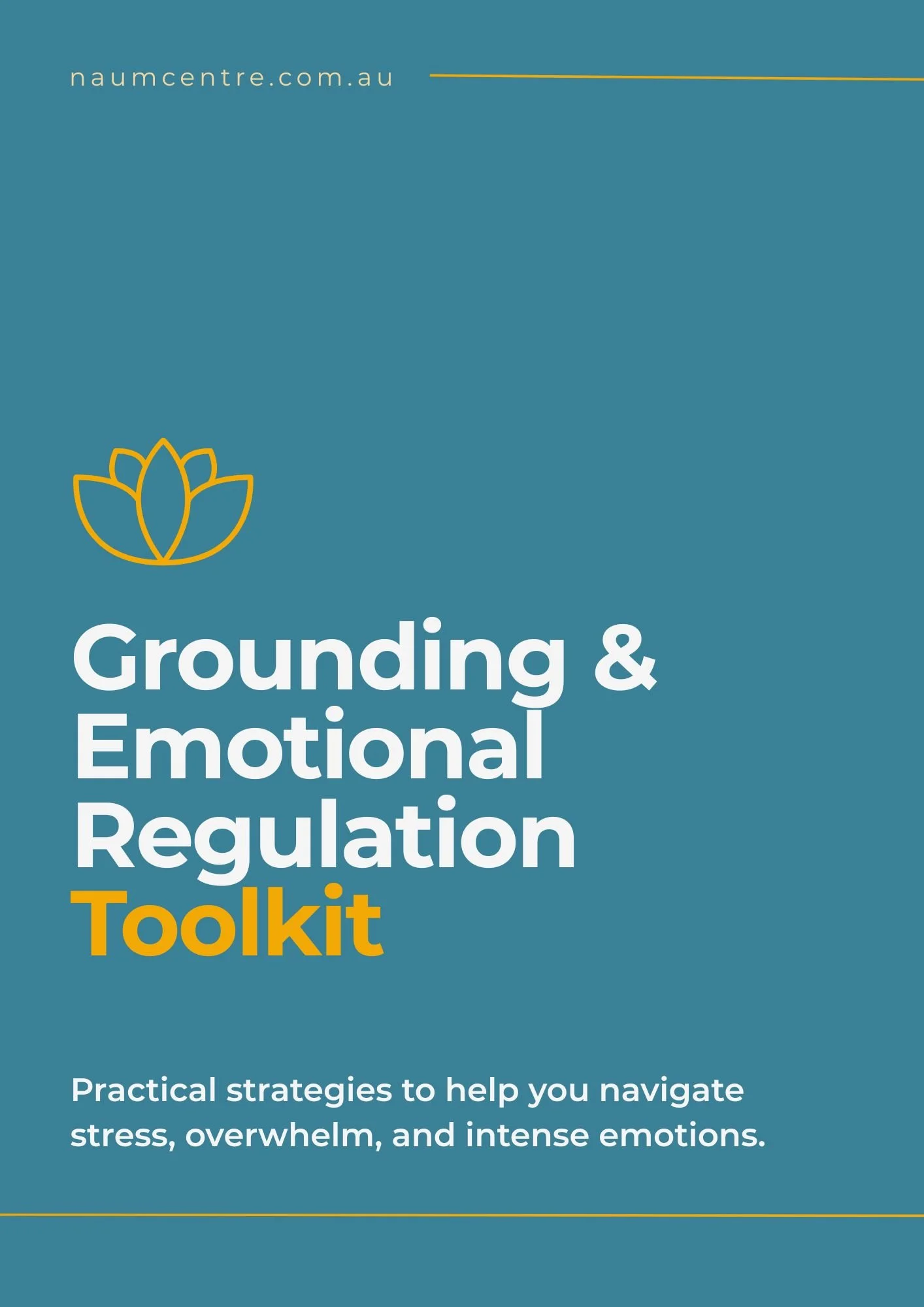
Practical strategies to help you feel calmer, more present and better able to navigate overwhelming emotions.
When we're feeling overwhelmed, anxious or emotionally flooded, it can be difficult to think clearly, make decisions or respond in the way we'd like. Our nervous system shifts into survival mode, making it harder to feel grounded and in control.
The Grounding & Emotional Regulation Toolkit has been developed by The Naum Centre to help you understand what's happening in these moments and provide practical, evidence-based strategies to support emotional regulation.
Rather than simply explaining the concepts, this workbook encourages you to build your own personalised toolkit - one that reflects your individual needs, preferences and everyday life.
Whether you're navigating anxiety, stress, burnout, ADHD, grief, trauma or simply the pressures of daily life, these skills can help you respond to difficult moments with greater awareness and confidence.
Inside You'll Find
✔ Understanding emotional regulation and why it matters
✔ Recognising your own early warning signs of stress and overwhelm
✔ Grounding techniques to help bring your attention back to the present moment
✔ Breathing and calming exercises
✔ Practical sensory regulation strategies
✔ A personalised regulation plan you can complete and refer back to
✔ Reflection activities to help identify what works best for you
Who Is This Workbook For?
This resource may be helpful if you:
often feel overwhelmed by strong emotions
experience anxiety or ongoing stress
find it difficult to calm yourself once you're upset
want practical strategies rather than just information
are looking to build healthier coping skills
would like to develop your own personalised regulation toolkit.
No previous counselling experience is needed.
A Practical Resource You Can Return To
Emotional regulation is a skill that develops over time. Rather than offering quick fixes, this workbook provides practical tools you can revisit whenever life becomes challenging.
Many of these exercises are also used within counselling sessions at The Naum Centre and are designed to complement professional support or be completed independently at your own pace.
Format
Digital PDF Download
Approximately 34 Pages
Instant access after purchase.
Please note: These resources are designed for educational and self-development purposes. They are not intended to replace individual counselling, psychological treatment or medical advice. If you're experiencing significant distress or are concerned about your mental health, we encourage you to seek support from a qualified health professional.